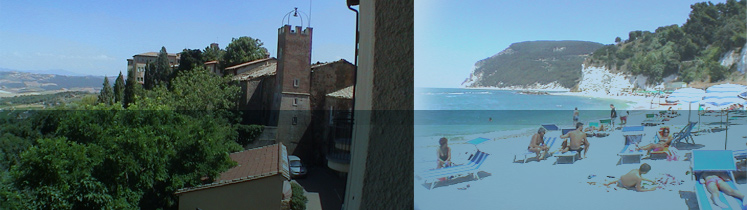
Extensively reconstructed after the damage caused by bombing in World War II, and hemmed in by the sprawl that has accompanied its development as the most important economic centre of the Veneto, PADUA (PADOVA) is not immediately the most alluring city in northern Italy. It is, however, one of the most ancient, and plentiful evidence remains of its impressive lineage. A large student population creates a young, vibrant atmosphere and the city has undoubtedly the best nightlife within reach of Venice. As a result, more and more people use Padua as a base from which to make day-trips to its overcrowded neighbour.
A Roman municipium from 45 BC, the city thrived until the barbarian onslaughts and the subsequent Lombard invasion at the start of the seventh century. Recovery was slow, but by the middle of the twelfth century, when it became a free commune, Padua was prosperous once again. The university was founded in 1221, and a decade later the city became a place of pilgrimage following the death here of St Anthony.
In 1337 the Da Carrara family established control. Under their domination, Paduas cultural eminence was secured - Giotto, Dante and Petrarch were among those attracted here - but Carraresi territorial ambitions led to conflict with Venice, and in 1405 the citys independence ended with its conquest by the neighbouring republic. Though politically nullified, Padua remained an artistic and intellectual centre: Donatello and Mantegna both worked here, and in the seventeenth century Galileo researched at the university, where the medical faculty was one of the most ambitious in Europe. With the fall of the Venetian Republic the city passed to Napoleon, who handed it over to the Austrians, after whose regime Padua was annexed to Italy in 1866.
From the train station, the Corso del Popolo, later the Corso Garibaldi lead south through a gap in the Renaissance city walls towards the centre of the city, passing after a short distance the Cappella degli Scrovegni and Musei Civici (Tues-Sun: Feb-Oct 9am-7pm; Nov-Jan 9am-6pm; entrance included in Padova Arte ticket; Cappella is also open on its own on Mon; L7000/?3.62). For many people the Giotto frescoes (L2000/?1.03 surcharge; tel 049.820.4550) in the Scrovegni, considered to be one of the key works in the development of European art, are the reason for coming to Padua, but even if youre no expert the chapel exerts an extraordinary presence. If anything the sense of drama has been increased by the new airlock entrance system, recently installed in an attempt to reverse the damage caused to the frescoes by high levels of humidity borne by the breath and clothing of visitors. At the time printed on your ticket, the glass door to the waiting room slides open to allow the next set of visitors in - and immediately shuts again, anyone left outside being forced to pay up and book another slot. Once inside, a high-tech system adjusts the air humidity of the waiting room down to that of the chapel itself and filters away the worst of the spores and pollution. Fourteen minutes later another door leading to the chapel itself opens and you have exactly a quarter of an hour to take in the frescoes before being ejected through a third glass door back into the grounds of the museum. Visits are restricted to a maximum of twenty-five people at a time and given the popularity of the Scrovegni its worth booking around three days in advance. If youre travelling in a group, however, or at weekends during high season its worth booking as much as a month ahead; out of season, you can usually just turn up and wait.
The chapel was commissioned in 1303 by Enrico Scrovegni in atonement for his fathers usury, which was so vicious that he was denied a Christian burial. As soon as the walls were built, Giotto was commissioned to cover them with illustrations of the life of Mary, the life of Jesus and the story of the Passion; the finished cycle, arranged in three tightly-knit tiers and painted against a backdrop of saturated blue, is one of the high points in the development of European art. The Scrovegni series is a marvellous demonstration of Giottos innovative attention to the inner nature of his subjects. In terms of sheer physical presence and the relationships between the figures and their environment, Giottos work takes the first important strides towards realism and humanism. The Joachim series on the top row of the north wall (on your right as you walk in) is particularly powerful - note the exchange of looks between the two shepherds in the Arrival of Joachim . Beneath the main pictures are shown the vices and virtues in human (usually female) form, while on the wall above the door is a Last Judgement - in rather poor condition and now thought to be only partly by Giotto - with rivers of fire leading from God to hell. Directly above the door is a portrait of Scrovegni presenting the chapel; his tomb is at the far end, behind the altar with its statues by Giovanni Pisano .
The neighbouring Musei Civici degli Eremitani (same hours and ticket as above), formerly the monastery of the Eremitani, is a superbly presented three-part museum complex. The archeological collection, on the ground floor, has a vast array of pre-Roman, Roman and paleo-Christian objects. Upstairs, the vast Museo dArte houses an extensive assembly of fourteenth- to nineteenth-century art from the Veneto and further afield. The collection is arranged in chronological order, and its a fairly long walk through tracts of workaday stuff, but names such as Titian, Tintoretto and Tiepolo leaven the mix. Spectacular highpoints are provided by the Giotto Crucifixion that was once in the Scrovegni chapel, and a fine Portrait of a Young Senator by Bellini. The Capodilista collection, an offshoot of the main gallery, has a pair of mysterious Titian and Giorgione landscapes, and some good Luca Giordano grotesques. The Museo Bottacin , for more specialist tastes, was founded in 1865 and contains over 50,000 coins, medals and seals, making it one of the most important museums of its type in the world.
Submit your articles to ICEBERG2000.COM
By: max piecesni
None